Showing posts with label food. Show all posts

I've launched a new blog!

I've launched a new blog! Join me in my experimentation and exploration of historic cuisine.

Four Pounds Flour -- Rethinking Historic Cuisine.

The First Turducken?


"...My favorite part of the book is “Part 2: Historical Recipes,” which date from the sixteenth to the twentieth centuries. I don’t know why old recipes are so evocative, since many of the ingredients are unknown to me or difficult to get, the processes laborious beyond belief, and the results, quite honestly, often nothing I’d want to eat. But they read like a poetry of lost specifics, in which you learn old words and ways to boil, bone, braise, devil, hash, jelly, pot, roast, sauce, steam, stew, and stuff a turkey...

"The author of one of the listed recipes, for instance, Hannah Glasse, who in 1747 self-published The Art of Cookery Made Plain and Easy, writes of a 'Yorkshire Christmas-Pye' made with a bushel of flour, four pounds of butter, and a boned 'Turkey, a Goose, a Fowl, a Partridge, and a Pigeon,' all nestled one in the next. Add mace, nutmegs, cloves, black pepper, and salt. Surround the turkey with a jointed hare and 'Woodcock, more Game, and what Sort of Wild fowl you can get.' The pies bake four hours in a very hot oven and should emerge with 'Walls…well built' so they can be 'sent to London in a Box as Presents….'"
Have a wonderful Thanksgiving.

A Few Notes on 'Pai'


I was paging through one of my favorite cookbooks, The American Heritage Cookbook, looking for Thanksgiving pie recipes. The AHC is a great book that gives modern cooking directions for historical dishes. However, the book was published in 1964, so I always cross check the recipes with period sources for accuracy.


One of the wonderful things about The AHC is that before the recipes, it often has historic quotes which give wonderful insights into early America. Below, two quotes on pie.


"An immigrant living in Beloit, Wisconsin wrote on November 29th, 1851, to friends back in Norway: 'Strawberries, raspberries and blackberries thrive here. From these they make a wonderful dish combined with syrup and sugar called pai. I can tell you that it is something that glides easily down your throat; they also make the same sort of pai out of apples or finely ground meat, with syrup added, and that is really the most superb.'"


"'Pumpkin pie,' according to The House Mother, 'if rightly made, is a thing of beauty and joy--while it lasts...Pies that cut a little less firm than a pine board, and those that run around your plate are alike to be avoided...With the pastry light, tender, and not too rich, and a generous filling of smooth, spiced sweetness--a little "trembly" as to consistency, and delicately brown on top--a perfect pumpkin pie, eaten before the life has gone out of it, is one of the real additions made by American cookery to the good things of the world.'"

Sure to be a Hit at Your Thanksgiving Table: Indian Pudding!


This year, for our Thanksgiving gathering, I've been requested to make an old-timey dish: Indian Pudding. I first made this dessert two years ago at "A Revolutionary Thanksgiving," and it's one of my favorite 18th century recipes.

In 1796 the first American cookbook, American Cookery, was published. Up until that point, American housewives had been using British books that neglected American ingredients such as corn, squash, and maple syrup.

I feel this recipe is so representative of our country's early cuisine. A variation on English puddings, combined with Native American techniques of cooking corn, it's not unlikely it would have appeared at the first Thanksgiving table.

As usual with my recipes, this receipt is a combination from several sources, and adapted to modern cooking techniques.

1/4 cup corn meal
2 cups hot milk + 1 cup cold milk
1/4 cup sugar (brown or cane sugar will lend a more accurate flavor)
1/4 cup plus 1 tblsp molasses or maple syrup (each one will lend a very different flavoring, I use maple syrup)
2 eggs
1/8 tsp baking soda
1/2 teaspoon salt
1/2 teaspoon ground ginger (or you can use cinnamon, although it is not appropriate for 18th century America)
1/2 teaspoon fresh ground nutmeg

Preheat oven to 275. Heat milk over a low heat. When hot, add cornmeal a little at a time, and cook over low heat, stirring constantly, for 15 minutes. You feel the mixture thicken--you are essentially making a polenta. Remove from heat and stir in the cup of cold milk, let cool. Mix together sugar, baking soda, salt and spices in a large bowl. Crack eggs into a small bowl and beat gently to break up the yolks. Add eggs to cooled cornmeal mixture and combine. Stir in sugar mixture. Add maple syrup (or molasses) and mix well.

Pour into a one quart casserole and bake for 2-3 hours. This dish is best made the day before, refridgerated, and reheated before serving.

Serve with a hard sauce:

1/3 cup butter
1/3 cup confectioner's sugar
1 tsp vanilla or 2 tsp brandy
Nutmeg, ginger, or cinnamon to taste.

Cream butter with sugar. Add vanilla and spices, mix well.

This Christmas, Hang Out with Henry II!


If you live in the Cleveland area, you are not going to want to miss the annual Medieval Christmas Feast at Trinity Cathedral. Featured on The Food Network, the Feast includes:

"...A procession into the cathedral nave for a multi-course banquet of hearty medieval fare eaten with the fingers. Wine, ale and fruit juice accompany the food, and interactive entertainment will delight you between courses.

The evening ends with the curious ceremony of the Pig's Head. Our beautiful Gothic venue provides a perfect setting for group photos afterwards. (You'll want to come in costume for those photo ops; we'll give you suggestions with your confirmation!)"

China in 2008? No, New York City in 1858.


"THE milk was marketed as pure and wholesome, and it looked fine to the naked eye. How were the mothers to know they were poisoning their babies? They had paid good money for it on the open market. It would take thousands of sick children before lawmakers did anything to stop it...


"China in 2008? No, New York City in 1858.

"Adulteration on such a scandalous scale occurs in societies with a toxic combination of characteristics: a fast-growing capitalist economy coupled with a government unable or unwilling to regulate the food supply. In such get-rich-quick societies, there is a huge temptation to tamper with food, particularly when margins are low. The rewards are instant, and it’s not always easy for consumers to detect the difference between the pure and the doctored — particularly with a substance like milk, which we have been taught to trust implicitly.


"In the end, New York milk was cleaned up. It took stronger food laws, better policing, the advent of pasteurization and the passage of the Food and Drug Act in 1906, 50 years after the worst of swill milk. Above all, it took decades, not months or years. China faces many more food scandals — to add to recent alarms like pesticide-laced dumplings and lard made from sewage — before it reaches the point where its citizens can routinely trust what they eat...China’s present is America’s past."


Excerpted from The Swill Is Gone New York Times September 29th


Also, read the original articles on swill milk in the New York Times Archives

The Devil in the White City Dinner Party: Recipes!


The final menu:

Soup
Creme de Celeri

Hors D'oeuvres
Peach and Almond Salad; Olives

Refeve
Filet de Beouf aux Champignons
Haricots Verts
Pommes Parisiennes
Sorbet
Sorbet au Kirsch
Cigarettes

Roti
Roti de Carnard
Salade de Laitue

Dessert
Ginger Ice Cream
Bon-Bons; Assorted Fruit

Fromages
Roquefort et Camembert

Coffee, Cigars
Absinthe

All in all, the meal took three hours to devour.

Due to time and budget constraints, I wasn't able to pick out a wine for each course. I asked my guests to bring a boozey donation for the group. I did supply Kubler Absinthe for after dinner drinks, purchased at Lenell's in Redhook.

The cheeses came from Murray's; the Roquefort was a little too pungent for my taste, but the guests enjoyed it. The Camembert was buttery and delicious, and it was made in upstate New York.

The bon-bons were pralines from La Maison du Chocolate. There is actually a period appropriate chocolatier in New York, Debauve and Gallais. In fact, they were the first chocolatier ever, their first patron being Marie Antoinette. Their bon bons, however, were well out of my price range.

Coffee came from the always delicious Empire Coffee and Tea on 42nd and 9th.

The cigars and cigarettes came from J&R Cigar on 46th and 5th, a high quality shop with an inexpensive, hand-rolled, house brand; and good deals on name brand products. The Cigarettes were 100% tobacco Nat Sherman lights. The cigarette break in the middle of the meal was delightful; we all ajurned to my roof which has a view of Manhattan. Smoking cigars, sipping cocktails and talking post meal was also an exquisite experience.

A full list of the recipes I used are below. Many of them came from my own head, but I often consulted several different sources to create them. I have listed those resources in parenthesis.


Crème of Celery Soup
(The Epicurean: Part 1; foodnetwork.com)

20-25 ribs of celery
2 cups chicken stock or broth
1tablespoon sugar
1tsp fresh grated nutmeg
1 tsp salt
1 tsp pepper
2 tablespoons flour
3 tablespoons butter

De-rib celery with a vegetable peeler. Dice and blanch until soft. Drain all but 1 ½ cups liquid; add sugar, nutmeg, salt and pepper. Puree in a blender or food processor.
Create a roux with butter and flour, whisk in chicken broth. Simmer until slightly thickened; whisk in celery puree. Season to taste.


Peach and Almond Salad
(Feeding America)

2 ½ cups sliced peaches
½ cup slivered Almonds
1 cup sugar
3 egg yolks
Juice of 2 lemons

Boil sugar with ½ cup water for five minutes. Whisk egg yolks until frothy, then slowly drizzle in sugar syrup, whisking constantly. Return to medium heat, stirring constantly until it is thick enough to coat the back of a spoon. Let cool.

Pour a little of this dressing into a bowl; cut up peaches and add to the bowl, adding enough dressing to cover the peach slices. The sugar will prevent the peaches from oxidizing. Add almonds and mix. Serve with dressing to taste.


The recipes for Filet de Beouf aux Champignons and Pommes Parisiennes came directly from Julia Child's Mastering the Art of French Cooking.

The green beans were blanched until bright green, drained in a strainer rinsed in cold water to stop cooking. Then the were sauteed with butter and salt.


Kirsch Sorbet
(the chocolate traveler: http://www.chocolatetradingco.com/magazine.asp?section=28&id=42)

½ cup confectioners sugar
½ cup skim milk
½ cup heavy whipping cream
1 cup water
¼ cup + 1/8 cup kirschwasser

Bring the milk and sugar to a boil and simmer until the sugar has dissolved. Remove fromheat and stir in the water. Add the kirsch to taste. Pour into ice cream maker and make as usual. Transfer the ice cream to an airtight container and freeze until ready to eat. Garnish with cherry preserves.


Roti de Carnard
(Mastering the Art of French Cooking, page 272; Martha Stewart Everyday Food Magazine Herb Rubbed Turkey)

1 6lb Duckling
Celery
Onions
Parsley

Brine:
1 gallon water
1 cup sugar (I used maple syrup)
1 cup salt
2 bay leaves
5 peppercorns

Bring the brine to a boil in a large stockpot, then cool to room temperature. A few trays of ice cubes can be added. It is important the brine is cool so that the duck does not begin to stew in the hot liquid.

Remove the ducking from it's wrapping, and pull the neck and “gutbag” from the cavity. Set these aside in a saucepan. Soak the duck in the brine overnight in the refrigerator.

Add celery, an onions, bay leaves, peppercorns, and salt to the neck and guts in the saucepan. Cover with water and bring to a boil; turn down heat and simmer about 20 minutes. Strain and save liquid, save in refrigerator.

Before roasting, remove the ducking from the brine. Rinse thoroughly, including the inside cavity, and pat dry. Trim fat flaps from front and back of duck and stuff inside cavity. Fill cavity with parsley, a quartered onion, and celery. Sew or spear shut. Rub duckling with olive oil, salt, pepper, and Herbs de Provence.

Preheat oven to 425 degrees. Roast duck 15 minutes, then reduce heat to 350. A 6 pound duck will need to cook about 2 hours, until the juices are rosy (medium) or clear (well done).
Remove duck from roasting pan and turn breast side down on a platter. Let rest for about 10 minutes. Ladled up juices from pan, avoiding the fat, and add to duck stuck made the night before. Add wine to taste and bring to a hard boil. Boil until sauce is slightly thickened.

Carve duck and serve with sauce.


Salade de laitue
(Feeding America)

1 head lettuce
2 tablespoons oil
4 tablespoons white wine (or rice wine) vinegar
1 tsp pepper
1 tsp salt
Wash and dry lettuce. Rip into bite-size pieces.
Combine dressing ingredients in a container with a lid. Shake to combine. Pour over lettuce and toss.


Ginger ice cream
(foodnetwork.com)

3 cups heavy cream
1 cup skim milk
1/4 cup grated fresh ginger
Pinch salt
8 egg yolks
3/4 cup sugar
1 tsp Vanilla


In a large, heavy saucepan, combine the cream, milk, ginger, and salt over medium heat and simmer for 20 minutes.

In a large bowl, combine the egg yolks, sugar and vanilla. Whisk until pale yellow in color and frothy. Ladle 1/2 cup of the hot cream mixture into the eggs and whisk well to combine. Stir the egg mixture into the hot cream mixture and cook over low heat, stirring constantly to prevent sticking, until thick enough to coat the back of a spoon, 3 to 5 minutes. Strain into a large clean bowl through a fine mesh strainer, pressing with the back of a large spoon to extract as much liquid as possible. Cover tightly and place in the refrigerator until well chilled, at least 3 hours.
Pour the custard into the bowl of an ice cream maker, and freeze according to manufacturer's instructions. Transfer the ice cream to an airtight container and freeze until ready to eat.

The Devil in the White Dinner Party: Photos!


The DinWCDP was this past weekend, and it was a resounding success. If there's one thing people love, it's decadence.

Here are a few photos from the event (more to come). I'm going to have a complete menu and accompanying recipes up in a few days.

Gettysburg: Bloodshed and Snickerdoodles


Gettysburg is filled with a lot of kitch, including more wax museums than I've ever seen in one place. I recommend heading straight to the Gettysburg National Military Park and the brand new visitor's center and museum.

There has been a lot of controversy about how the history of the civil war should be taught at Nation Park sites. Up until recently, battle sites taught only the military history of the war, not the social and political situation surrounding it. This was in deference to Southerners who thought a Nothern account of the war would be biased and offensive.

Recently, under the guidance of a new director, the National Park has begun to paint a picture of the war as a whole, (South be damned). The new Gettysburg Visitor Center is one of the first steps in this new direction. (I read about this in a U.S News Special Report: Secret of the Civil War article over the summer. Unfortunately, I can't find the article online, so I hope I am correctly paraphrasing.)

I found the museum to be excellent. It was filled with personal artifacts, quotes, and stories that allowed you to connect with the history on a human level. One understands not just the battles of the war, but how the war came to be.

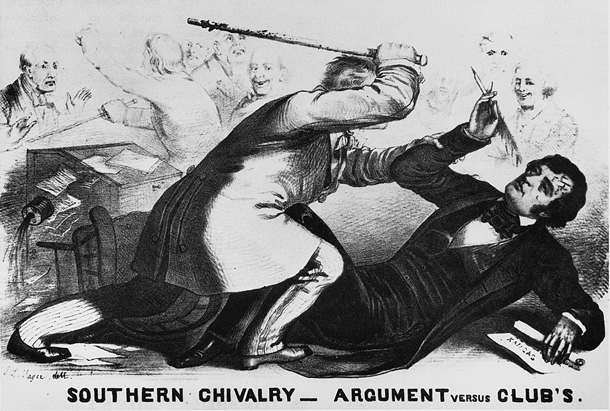
The most horrible new thing I learned was the story of Senator Charles Sumner, who in 1856:

"...Delivered a speech opposing the spread of slavery and mocking Southern slaveholders. Two days later, Rep. Preston Brooks of South Carolina walked into the chamber and beat Sumner unconscious with his cane."

Sumner was crippled for the rest of his life. Brooks, who broke his cane during the attack, was sent replacement canes by Southerners sympathetic to his cause.


One of the nicest touches at the Visitor's Center was a recreated "Refreshment Saloon." During war time, it was a volunteer-run mess hall for soldiers. In this modern Refreshment Saloon, they had all the usual lunchtime fair, but also had a menu of period appropriate food. My mom and I had roasted peanut soup with hard tack, and an order of Pennsylvania Pot Pie with cornbread, and a snickerdoodle for dessert. Delicious and accurate!

The National Park offers both a podcast of battle tours, and a map for a driving tour. I recommend paying the money for a bus tour with a licensed guide. The combination of standing on the ground where the battle took place, holding a map of the troop movements, and having someone explaining it step-by-step allowed me to finally understand the magnitude of what happened at Gettysburg.

Gettysburg National Military Park


The Devil in the White City Dinner Party

I'm planning a dinner party for mid-October based on The Devil in the White City, a non-fiction novel about the 1893 Chicago World's Fair and the serial killer that used the Fair to trap his victims. One of the things I found the most interesting about the book was two re-printed Victorian dinner menus. Here they are, from pages 98 and 219 respectively:


I really enjoyed all of the different courses, the attention to accompanying wines and liquors, and even that cigars and cigarettes were included on the menu. It's like a journey through dinner. So I've composed my own menu that combines elements from both, based on my experience and resources:

Alaskan Blue Point Oysters
Sauternes or Mantrachet

Soup
Creme de Celeri (Cream of Celery)
Amontillado

Hors D'oeuvres
Almond Salad and Olives

Refeve
Filet de Beouf aux Champignons (Beef Fillet with Mushrooms)
Haricots Verts (Green Beans)
Pommes Parisiennes (Paris Potatoes)
Pommery sec

Sorbet
Sorbet au Kirsch
Cigarettes

Roti
Roti de Carnard (Roast Duck)
Salade de Laitue (Lettuce Salad)

Dessert
Ginger Ice Cream
Bon Bons; Assorted Fruit

Fromages (Cheeses)
Roquefort et Camembert

Coffee, Cognac, Cigars

I skipped the fish course, because I have no experience with sea food, and I think it will save me a great deal on my budget. I do feel a little bad about it, since it's inaccurate not to include it.

I don't know a great deal about the different wines or liquors, so any advice on what to purchase, or suitable replacements, would be greatly appreciated. It might just all get substitute by red and white box wine.

French cuisine was all the vogue in the late 1800s, so for my resource material for the recipes I'm using The Epicurian, an encyclopedic reference of French recipes published contemporary to the World's Fair; and Julia Child's Mastering the Art of French Cooking Volume 1. Although Child's book was publishing more than half a century later, she relies on traditional French recipes and techniques which remain mostly true to the techniques used in the later half of the 19th century. In fact, her book may mark the end of the creamy-buttery American cuisine that started in the 18th century.

Also, I'm going to need a sous chef. Any takers?

So there you have it. What do you think?


"It gazes upon Chocolate and Sherbert, and says 'Before you were, I was; after you are not, I shall be.'"

When my friend Joseph told me he was sending me the oldest candy in America, I was terrified. One of the things I like least about 18th century cooking is the sweets: heavy cakes packed with raisins, sticky rods of sugar flavored with anise. Vom. So I was apprehensive when this arrived in the mail:


But as it turns out, it's delicious! Lightly minty, it's a hard candy but the texture is soft, with the delicate sheen and stratification of pulled sugar. Like a dinner mint, but somehow better. It's good! And something I can envision early Americans eating and enjoying!

It came from a candy store called To The Moon in Florida, but you can buy them online. There's also a lemon variety available

On my recent trip to Washington D.C. I came across this:


Chocolate wasn't widely used in bar form or as a flavoring until the post-civil war era (however, Marie Antoinette's pharmacist did invent the first chocolate candy). Up until then, it was almost exclusively drunk, in the place of coffee or tea, or as a meal in itself.

Recently, Mars teamed up with Colonial Williamsburg; University of California, Davis; and Fort Ticonderoga to research authentic chocolate recipes, and create a version that could be manufactured in large batches. I was astounded that there even was a "historic division of Mars."

However, I couldn't find any instruction on how to consume the Chocolate Stick, whether I was just supposed to gnaw on it, or melt it in hot water. When I removed it from the package, it looked like a turd and smelled like baking chocolate. But when I took a bite, the texture was surprisingly supple, and the flavor similar to some of the complex, European dark chocolates I've had in candy boutiques here in NYC. Dark, but light and not too bitter. Spicy after notes, like cinnamon. Really interesting.


American Heritage Chocolate (Mars) including a history of the use chocolate in America.

Junk Food News: Mars Launches Historically-Inspired American Heritage Chocolate

Vintage Candy Gift Box
Candycreate.com